
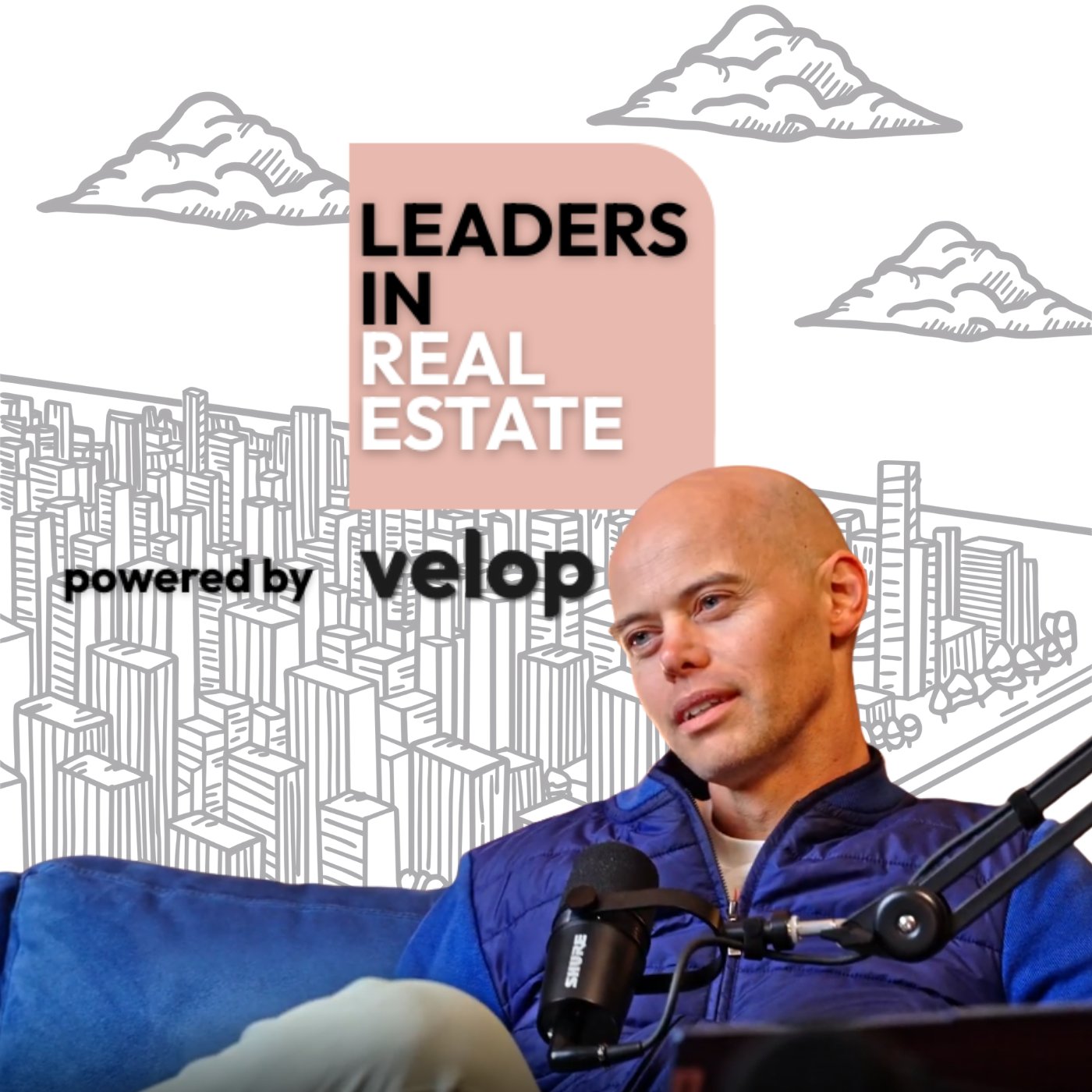
In this episode of Leaders in Real Estate, Velop founder Nick Carman talks to Lee Hayes Bradford, President of D.R. Horton Property Management, who built the homebuilder's in-house division from scratch into a team of more than 275 managing $3.2 billion of multifamily and build-to-rent assets. Lee shares how she leads people to their own answers, stays calm in a crisis and makes unpopular decisions.
Key takeaways
- No one feels ready. Lee didn't feel ready for her first leadership role and still learns every day. "If something scares you or intimidates you, it simply means that you have to do it."
- Lead before you have the title. She took early opportunities to speak up and identify problems long before anyone reported to her.
- Lead people to the answer. Instead of telling someone they're making a mistake, Lee shares her concerns and asks for theirs, because "they often know where the pitfalls are."
- Calm is a learned skill. Earlier in her career she charged ahead. Now she knows you get more answers by listening and staying calm.
- Your words last. A team member remembered the one time she snapped five years later, which taught her to think about how she says things.
- Indecision is worse than an unpopular decision. Leaving a team waiting is the worst thing a leader can do. Explain your reasoning and keep the door open for feedback.
- There are six solutions to every problem. Dropping "my way or the highway" means you hear the ideas you hadn't thought of.
- People are always watching. Her two biggest career opportunities came from people who never worked with her directly but saw how she treated others.
About Lee Hayes Bradford
Lee Hayes Bradford is President of D.R. Horton Property Management, the in-house property management division she launched for D.R. Horton, the largest homebuilder in the US by volume for 23 consecutive years. In four years she has built a team of more than 275 professionals managing a $3.2 billion portfolio of multifamily and build-to-rent assets across 35 US markets. She took her first large-scale leadership role at Summit Properties (later acquired by Camden), and her background spans property management, technology, and learning and development. Before her current role she served as a vice president.
In this episode
- 00:00 Introducing Lee Hayes Bradford, President, D.R. Horton Property Management
- 00:54 Her role: multifamily and build-to-rent across 35 markets
- 01:44 What drives her: "At heart, I'm a builder"
- 02:41 First leadership role at Summit Properties
- 03:30 Did she feel ready? Why no one ever does
- 04:24 Biggest challenge: finding common ground between teams
- 05:26 The leaders she admired, and the ones who taught her what not to do
- 06:27 Report card: "Lee never gives you the answer, she leads you to it"
- 09:00 The office floor story: calm is a learned skill
- 10:38 The one time she snapped
- 11:45 First-time leaders: leading friends and making unpopular decisions
- 15:48 "Be brave enough to suck at something new"
- 17:43 How she stays bold with $3.2 billion at stake
- 20:15 Books and tools: Simon Sinek and the DISC profile
- 22:45 What she doubled down on: asking questions
- 23:25 What she let go of: "my way or the highway"
- 25:06 Is leadership worth it?
- 26:12 What she looks for in future leaders
- 28:28 Pivotal moments: people are always watching
- 29:42 Wrap
Questions answered in this episode
What is the biggest challenge for first-time leaders?
Lee says it's leading people who were your peers and friends, and accepting that difficult decisions now sit with you. The hardest part is making a decision you know won't be popular. But not deciding, she says, is "actually the worst thing that you can do for your team."
How do you stay calm when things go wrong?
Calm is a skill Lee learned over time. When a team member's technology project went badly wrong and she ended up on the office floor in distress, Lee lay down beside her and said, "Let's work the problem together." She believes you get more answers by listening and staying calm than by charging ahead.
How do you lead people to their own answers?
Lee sits back and listens, because "your team is going to bring you the best insights." When she's worried about a decision, she says she has some concerns and asks for the other person's perspective first. Together they build an action plan.
What book or tool does Lee Hayes Bradford recommend for new leaders?
Anything by Simon Sinek, especially Start with Why, which she calls revolutionary. She also recommends the DISC profile, a simple assessment of how you lead, communicate, make decisions and collaborate under pressure. "It's not about labeling people. It's about awareness."
What does Lee Hayes Bradford look for in future leaders?
People who are open to new ideas, flexible, and who care about building great people, not just the platform. In an interview for a first leadership role, she wants candidates to explain what they bring today, their vision for the bigger role, and how they'll achieve it.
Notable quotes
"Be brave enough to suck at something new." (15:54)
"Not taking action, not making a decision... is actually the worst thing that you can do for your team." (13:12)
"People are always watching how we lead." (29:18)
About the host and Velop
Leaders in Real Estate is hosted by Nick Carman, founder of Velop, a real estate executive search firm for investors and developers in the US. Velop uses personality and cognitive assessments at the start of every search so clients can judge culture fit and potential before the shortlist. Contact Velop
Full transcript
[00:00] Introducing Lee Hayes Bradford, President, D.R. Horton Property Management
Nick: Welcome to the Leaders in Real Estate podcast. I’m your host, Nick Carman, and I hope this proves to be a mentor in your pocket for all the future leaders of real estate investment and development tuning in right now. We’re going to talk about the challenges, obstacles and benefits of leadership with the aid of our mentors sharing their own experience.
Today I’m joined by Lee Hayes Bradford. Lee is the President of D.R. Horton Property Management, responsible for a $3.2 billion portfolio, having launched property management as an in-house division for the country’s number one homebuilder for 23 consecutive years. Who better to mentor us on leadership than someone who leads a team of more than 275 professionals, built from scratch in the last four years? Lee, thank you very much for joining us.
Lee: Thank you for having me.
[00:54] Her role: multifamily and build-to-rent across 35 markets
Nick: It’s genuinely my pleasure. Let’s get started. Tell us a little about what you’re involved in today, please, Lee.
Lee: Today I’m leading a diverse portfolio of multifamily and build-to-rent assets across 35 markets in the US, so we cover every product type. Part of the challenge that really appealed to me was thinking about what the next chapter in property management looks like. As portfolios and product styles adapt, the business has to change with those needs.
[01:44] What drives her: “At heart, I’m a builder”
Nick: I look forward to diving into that as we go, Lee. But let’s wind the clock back a little. We’ll talk about drive throughout this episode, and I’m curious. Whenever I get to meet leaders like you who’ve climbed so high on the corporate ladder, I ask: what do you think drives you?
Lee: That’s a difficult but great question.
Nick: All my questions are easy to ask and tough to answer.
Lee: Fair. That’s why I’m in the hot seat. Obviously there’s a desire to achieve and compete. But I think at heart, I’m a builder. I love building processes, building people and building environments. Being able to look back and see the tangible results of what we’ve built together is, at the end of the day, what keeps me coming back time and time again.
[02:41] First leadership role at Summit Properties
Nick: Interesting. Let’s get into leadership and why we’re here. When was your first opportunity to lead?
Lee: Probably when I joined Summit Properties, which no longer exists. It was acquired by Camden many years ago. That was probably my first true opportunity to lead on a large scale, with a team reporting to me. It probably sounds cliché, but there are opportunities to lead even when you’re not in a leadership position. I took those opportunities: speaking up when I felt things needed to be said or acknowledged, and identifying problems that needed to be resolved.
[03:30] Did she feel ready? Why no one ever does
Nick: Did you feel ready for that first leadership role?
Lee: No. Does anybody ever?
Nick: That’s why I ask, because there’s this perception… I’m a recruiter, and I hear this a lot: “I’m not ready for that. It feels too big a leap for me right now.” I think it’s important to acknowledge that the people who take these positions don’t feel ready either. That’s why they take the leap.
Lee: Someone once told me that if something scares or intimidates you, it simply means you have to do it, because those are the opportunities and risks that help you build and achieve something. But no, I was not ready. I learned a lot of lessons through trial by fire along the way, and I still learn lessons every day.
[04:24] Biggest challenge: finding common ground between teams
Nick: Let’s talk about that. What have been some of your greatest challenges during this experience?
Lee: I think the greatest challenges are around bringing people to common ground. It’s very easy to identify areas of disagreement and focus on those. I’ve been lucky to lead my own teams, but all of them have also been responsible for working with and supporting the success of other teams, and it’s easy to forget we’re all playing toward the same goal. So finding ways to build alignment and agreement across disparate teams has been the greatest challenge, because it requires, I think, the most finesse and the most thoughtful approach.
[05:26] The leaders she admired, and the ones who taught her what not to do
Nick: Next question. The leaders you’ve worked for, the people you’ve experienced leadership from: what qualities have you admired in them?
Lee: Compassion. Intelligence. The ability to support you when you make a mistake and help you learn from it, rather than tearing you down for making it. And really, integrity.
Nick: Has that shaped you as a leader?
Lee: Absolutely. I’ve been shaped by being lucky enough to work with great leaders. I’ve also been shaped by working for some not-so-great leaders, because not-so-great leaders teach you what not to do. And I’m sure there have been times in my career when I could have been a better leader. I took those as opportunities to ask: what do I learn from this experience to make me better in the future?
[06:27] Report card: “Lee never gives you the answer, she leads you to it”
Nick: Are you ready to get your report card out, Lee? I’ve done a bit of digging and spoken to a few people who’ve been fortunate enough to be on your teams over the years.
Lee: Hit me with one.
Nick: I spoke to someone who’s been on your teams several times over the years and asked her, “What type of leader is Lee?” This is what she gave me: “Lee never gives you the answer. She leads you to it. Lee’s team will walk through fire because of this.” That’s nice to hear, isn’t it?
Lee: That’s a lovely thing to hear. Yes.
Nick: How do you do that? How do you not jump in? I equate leadership with parenting. There are some similarities, aren’t there? How do you resist jumping in to stop that employee from falling?
Lee: I think that’s a skill I’ve learned from many of the leaders I’ve worked with. Often, on your way up, it’s about making sure your presence is known. But when you’re a leader, it’s often about sitting back and listening to the thoughts of others. Your team is going to bring you the best insights and the best ideas, and it’s about figuring out how to take those insights and ideas and build them into something actionable, again, where people can find areas to agree on and move forward.
On your question about how not to let people fall: it’s about being honest and direct in those conversations and sharing your concerns and thoughts. But what I’ve found most valuable is listening to their concerns and thoughts, rather than walking up to somebody and saying, “You’re making a mistake. This is a bad decision, and I’m going to tell you what’s wrong with it.” I’ll often approach it as: “I have some concerns, but I’d like to understand whether you have any. Can you share your perspective with me?” They often know where the pitfalls are in the actions they’re taking, and together we can build an action plan to help them move forward in the right direction.
[09:00] The office floor story: calm is a learned skill
Nick: That’s a nice segue to something else I collected from your report card. You mentioned that the traits you admire in leaders include calm, empathy and working through problems together. I asked someone else who spent time on your teams about a time when things went wrong. She gave me a brilliant anecdote about being responsible for a special technology project that went very badly wrong. She came into your office and confessed what was happening, and she said she fell to the floor about it, and you came and lay down with her and said, “Let’s work the problem together.” I thought that was a brilliant story. That one anecdote tells me so much about you, Lee, and how you lead.
Lee: Well, that was my favorite. I’d never had anybody lie on the floor before, but I thought, “Okay, if this is where we are, let’s get down there together.” Calm is definitely a learned skill. Earlier in my career I was much more action-oriented and much more focused on charging ahead. What I learned through my background in technology, learning and development, and leadership is that you get more answers by listening and remaining calm.
[10:38] The one time she snapped
Lee: One bad management moment has always stuck with me. I had a key team member, and one day I got frustrated, took it out on them and snapped, which is not something I’d often, or ever, do. Five years later they’d still say, “Remember that time you snapped at me?” And I thought, “Wow. The one time I lost my cool had such an impact on you that, five years later, after all the great things we’ve done and built together, it’s still having an impact on you?” So I’ve learned to think before I speak, and to think about the impact that how I say something is going to have.
Nick: I think that’s really powerful, and it says a lot about you, Lee, that the message has stuck with you, and that you haven’t let it frustrate you by saying, “That one slip isn’t important. What about everything else we’ve done brilliantly?” I think you’ve also taken that in your stride.
[11:45] First-time leaders: leading friends and making unpopular decisions
Nick: Let’s get into the crux of this conversation. Our audience is either looking ahead to their first leadership role or right in the eye of the storm of it, so they’re looking for a bit of help. What do you think are some of the biggest challenges facing people at that stage of their career? Among the 300 or so people on your teams today, what do you see those at that stage struggling with?
Lee: Often, when you’re in your first leadership role, you’ve been put in a position where you’re leading your peers and your friends. You have to find the right balance in how you interact as a leader, and understand that you now have greater responsibilities. You’re now tasked with making the difficult decisions, and that decision isn’t on anyone else. I think part of the hardest part of leadership is being able to make a decision even when you know it won’t be popular or embraced by everyone. But as a leader, you have to learn that not taking action, not making a decision and not moving forward is actually the worst thing you can do for your team.
Nick: It’s a hard lesson, isn’t it? We all want to be liked. It’s the human condition. We want to be popular, and I’ve certainly felt this in my own experience. There are leaders I’ve loved, and I want to feel that from my team. So making a decision that goes against the grain, that you know is unpopular, is really, really hard.
Lee: It is really hard. But the impact of leaving your team hanging, waiting for a decision, is equally hard. By making that decision, you’re taking action that helps earn what I’d call the respect and the love of your team. They may not always agree with your decisions, and I believe a great leader shares the reasons for their decisions and the impact they believe each decision will have. But they’ll be so relieved to have a path forward. A great leader will also leave the door open: “I’m not sure this is going to have the impact we want, and I’m trusting you to come to me and tell me what’s working and what’s not, so we can make it better together.”
Too often I’ve seen leaders not want to take action, and I’ve struggled with it myself. I’ve seen the impact. If you have a difficult decision about whether to keep a team member or let them go, no one likes those decisions. But when your team comes to you and says, “Thank you for finally doing that,” to me that’s an indicator: “Wow, this is an action I should have taken long ago.” And it may not be about keeping someone or letting them go. It could be that two teams fundamentally disagree on how to reach the same outcome, and I have to be the person who chooses the direction. But we have to take action and define a direction.
[15:48] “Be brave enough to suck at something new”
Nick: Lee, tell me about that poster behind you. Read it out for me.
Lee: It says, “Be brave enough to suck at something new.” When I started at D.R. Horton, one of my team members and a great friend sent me a social media post that said, “Be brave enough to suck at something new.” It was a big step in my career. It’s one thing being a vice president. It’s another thing moving to the top of the food chain. It really resonated with me, so I put it on my whiteboard, so that every day when I sat at my desk thinking, “I don’t know 100% what I’m doing,” I looked at it.
Someone who didn’t even work in my division at D.R. Horton saw it every day as they walked past my desk, and it resonated with them so much that they had it made into a formal plaque for me. I told them I’d keep it with me always, and I have and I will, because it’s a reminder to be brave and bold. When you start something, you’re never going to be the expert at it. You learn as you go.
Nick: I like that a lot. So much of this is about being brave, isn’t it?
Lee: It is.
Nick: I think that’s the reality of being a leader: you’re at the front of this, and things will change. Real estate is often compared to a slow market where things move slowly, but with people, things can change during the day. So being brave is really important.
[17:43] How she stays bold with $3.2 billion at stake
Nick: But how do you stay brave? The stakes for you now are ginormous. We talked about some of the numbers before: billions of dollars. Even personally, it’s a ginormous responsibility. How do you not cave to that responsibility and just play it safe?
Lee: At the end of the day, I’m responsible not just for $3.2 billion of property. I’m responsible for teams, for people who have entrusted their careers to me and my group. I’m responsible for making sure they have an environment where they feel they can succeed, and where collectively we can work together to make sure our team delivers the results it needs. That means even on the tough days, I have to show up.
Nick: Do you have an easy day, Lee? You’ve just made this even more scary by listing all those responsibilities.
Lee: I do have easy days, because I’ve chosen skilled and smart people whom I trust to do this together, and I’m smart enough to listen to them. So there are easy days, because I’m a collaborative leader. I’ll go to anyone on my team and ask what’s working, what’s not working and how we make it right, and then work with the people on my team to implement those solutions. Those are the good days.
Nick: You’ve given us the method there, Lee, but I don’t think you’ve answered my question. How does this not scare you back into your comfort zone?
Lee: Probably because every day I go back to my goal: why did I take this opportunity? Why did I choose this role? It was to help push property management forward into its next phase of evolution. That means you have to make bold choices and smart decisions.
[20:15] Books and tools: Simon Sinek and the DISC profile
Nick: That resonates with me. When I set up Velop and left the comfort and safety of a big organization to start something new, a close friend and customer gave me Simon Sinek’s book on why, and I’ve read it a couple of times over the last 12 months. I think that’s really powerful stuff. Sticking with that, tell our audience: what book or resource would you recommend they pick up today to help them through the dark days?
Lee: I’m also a big fan of anything by Simon Sinek. His work on why was really revolutionary for me, because it changed the way I thought, and it’s been the foundation of a lot of initiatives I’ve led.
But I believe most breakdowns in business and in life are really due to communication. Not necessarily what’s said, but how it’s received. So I’d recommend any resource that helps you better understand how others communicate and how to adapt your style to connect more effectively. For me, that’s the DISC profile. It’s a simple assessment that helps you understand how you tend to lead, communicate, make decisions and collaborate, especially under pressure. The benefit of DISC isn’t just the insight it gives you into yourself, but the understanding it gives you of how others approach the same things. It’s not about labeling people. It’s about awareness. When you understand your style and how to adapt it to meet others where they are, everything changes. Communication gets better, you build trust faster, you reduce friction and you strengthen relationships. To me, that’s the foundation of great leadership.
Nick: On using those tools, I completely agree. I think they can be an absolute game-changer: opening your eyes to our differences and where we meet. Recognizing those can be rocket fuel for leadership.
[22:45] What she doubled down on: asking questions
Nick: Okay. What leadership trait have you doubled down on during your career, Lee? What has become core to you as a leader?
Lee: Asking questions to gain a better understanding. That’s understanding the goal, the project or the concern, but it’s also understanding what drives people and what concerns them about the project, so we can identify the best solutions.
[23:25] What she let go of: “my way or the highway”
Nick: What have you had to quieten? What have you tried to lose from the toolkit you’ve been developing over the years? A trait you had or used, or maybe something you’ve observed in other leaders, that you’ve tried to reduce?
Lee: Probably “my way or the highway.” I once read that there are six solutions to every problem. Of those six, probably only three are good, and there may be one best. But it’s about identifying what those six are. If I come in and say, “This is the only way we’re going to do it,” that cuts out other great feedback and other great ideas I may not have thought of. So I try rarely, I’ll say rarely, because sometimes as a leader you have to be dictatorial, to say, “Nope, this is the only way it can happen, and this is how we’re doing it.”
Nick: It’s interesting, isn’t it? If you ask less experienced leaders, chances are that military-general style is what they associate with leadership. I think that’s the portrayal of what a leader should be. Yet I ask this question a lot in this series, to your peers, Lee, and very rarely is that their go-to style. So I think we’ve got a lot to learn.
[25:06] Is leadership worth it?
Nick: We’ve talked a lot about leadership and the scale of the leadership you have today. Is it worth it?
Lee: I probably hesitated longer than I should have to answer that. For me, 100%, it is worth it. But in your desire to be a leader, you have to be aware that there are compromises you’ll make. By that I mean you’ll decide where you invest your time, and there’s only so much of it. You have to make choices: am I taking the business trip? Am I spending the extra hours at work, or going out and doing something I want to do? So yes, leadership is worth it. It’s an honor and a privilege, but it’s hard work, and nothing worth having comes easily. You have to be convinced it’s a role you truly want.
[26:12] What she looks for in future leaders
Nick: You must have interviewed countless prospective leaders. What are you looking for in your teams?
Lee: I’m looking for people who are open to new ideas, who are flexible, and who genuinely care not just about the success of the platform but about building great people.
Nick: Expand on that a little. How could someone with less experience demonstrate that to you in a relatively short career? I’m thinking about advice for our audience who aren’t in that spot yet. Say next week they’ll be in front of Lee interviewing for their first leadership role. What could they have done to prepare? What foundation should they be laying now, in their role today, to impress you?
Lee: I think it’s about being able to share effectively what you bring to the table today, but also your vision for what you believe you can bring to this new, expanded role, and being able to explain how you would achieve what you want to do as you move forward in your leadership journey.
While I talked about the DISC assessment, there are a lot of assessments out there. Assessments often say, “This is how you operate and where you are today,” but that isn’t necessarily an indicator of where you can grow and how you can operate in the future. So for my next leadership group, that next generation of leaders, I’d want to understand what their vision is and how they’ll work to create it.
[28:28] Pivotal moments: people are always watching
Nick: Okay, Lee, we’ve got to start wrapping up, but I wanted to make sure I asked you at least one last question. As we said at the start, your career took off like a rocket and has continued on the same trajectory. Share some of that experience with us. What have been the most pivotal moments of your career so far?
Lee: When I think about the pivotal moments in my career, what really stands out isn’t a single event. It’s realizing that leadership is how you show up every day. The two biggest opportunities I’ve had actually came from people I didn’t work with directly. They’d just seen how I approached my work, how I collaborated and how I treated others. That’s stuck with me. It reminds me that people are always watching how we lead, not just when you’re in a leadership role or in the spotlight, but in those everyday moments. Consistency, professionalism and how you treat people can open doors you don’t even know are there.
[29:42] Wrap
Nick: Well, Lee, what a positive message to wrap up on. Thank you so much for giving up your time. And to everyone listening, make sure you click like and subscribe. I want to hear from you in the comments: what questions haven’t I asked Lee, and who do you want on this series next? Thank you very much for giving up this time so graciously, Lee.
Lee: Thank you very much for having me. It’s been a pleasure.
Published November 17, 2025. At the time of recording (October 2025), Lee Hayes Bradford was President of D.R. Horton Property Management.